Found primarily in arid and semi-arid environments as carbonate minerals (like calcium carbonate/limestone).
Soil Organic Carbon (SOC):
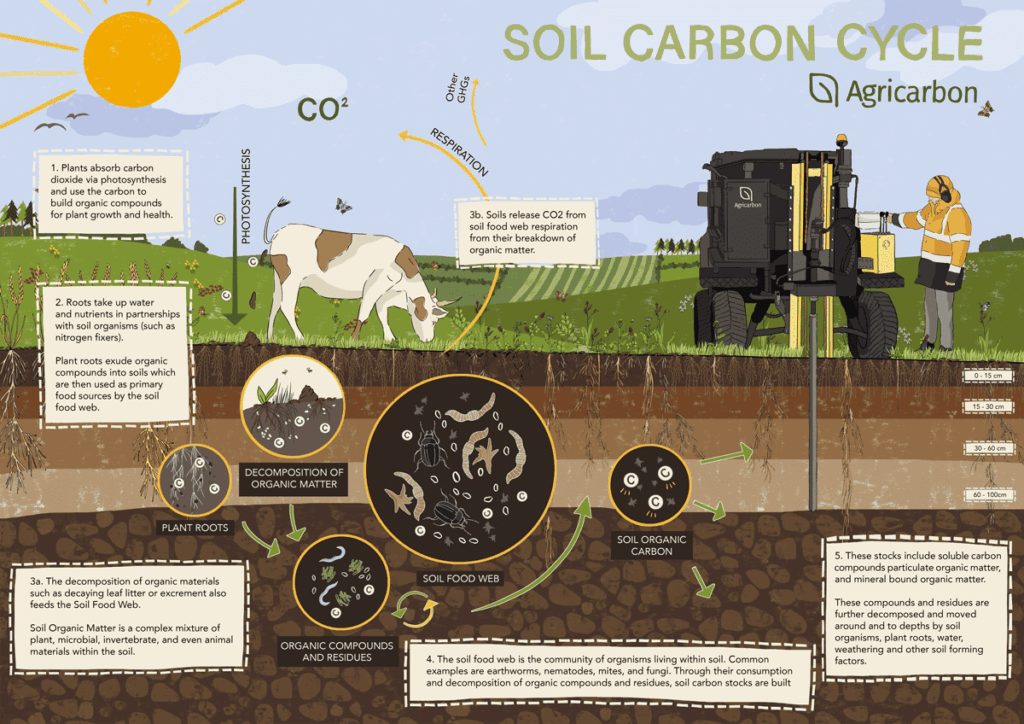
Makes up the vast majority of soil carbon. It is the foundation of soil organic matter (SOM) and comes from decaying plant roots, leaves, and soil microbes.
Why It Matters
Soil Health: Carbon gives soil its dark, rich color and spongy texture. It helps soil retain water, prevents erosion, and acts as a reservoir for essential plant nutrients like nitrogen and phosphorus.
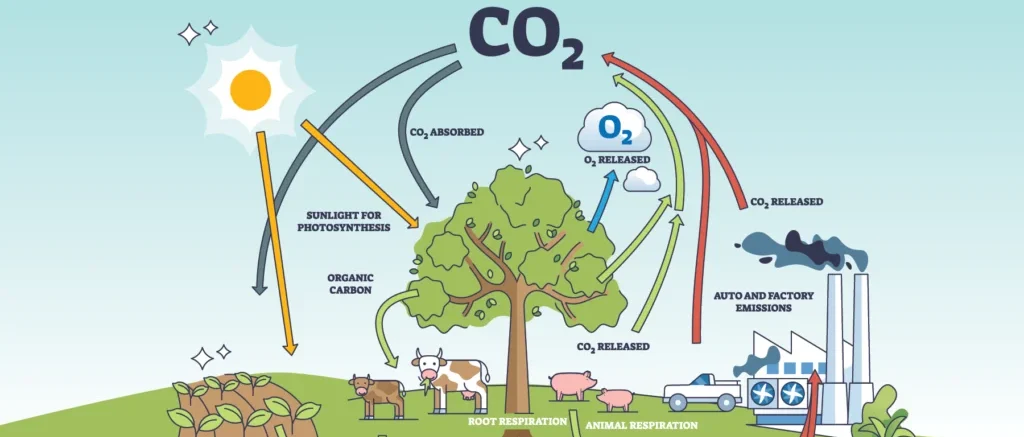
Climate Change Mitigation: Through a process called soil carbon sequestration, healthy soils can pull excess carbon dioxide CO2 from the atmosphere and lock it safely underground.
How Carbon Enters the Soil
Photosynthesis: Plants pull CO2 from the atmosphere and convert it into sugars to grow.
Exudates & Decomposition: Plants release carbon-rich sugars into the soil through their roots. When plants die or shed leaves, this material decays into the soil.
Microbial Conversion: Microorganisms (like bacteria and fungi) break down the plant material, stabilizing the carbon into the soil structure where it can be stored long-term.
Farming Practices That Build Soil Carbon
Agricultural practices like tillage and monocropping deplete soil carbon over time. To actively rebuild soil carbon reserves, farmers utilize regenerative agriculture methods, such as:
Cover Cropping: Keeping living roots in the soil year-round to continuously feed carbon to microbes.
No-Till Farming: Avoiding plowing to prevent the physical disruption of soil, which releases stored carbon into the atmosphere.
Crop Rotation: Alternating different crops to maximize biodiversity and root depth.
RETURNING TO THE SOIL TO SAVE THE EARTH 4 HUMANITY